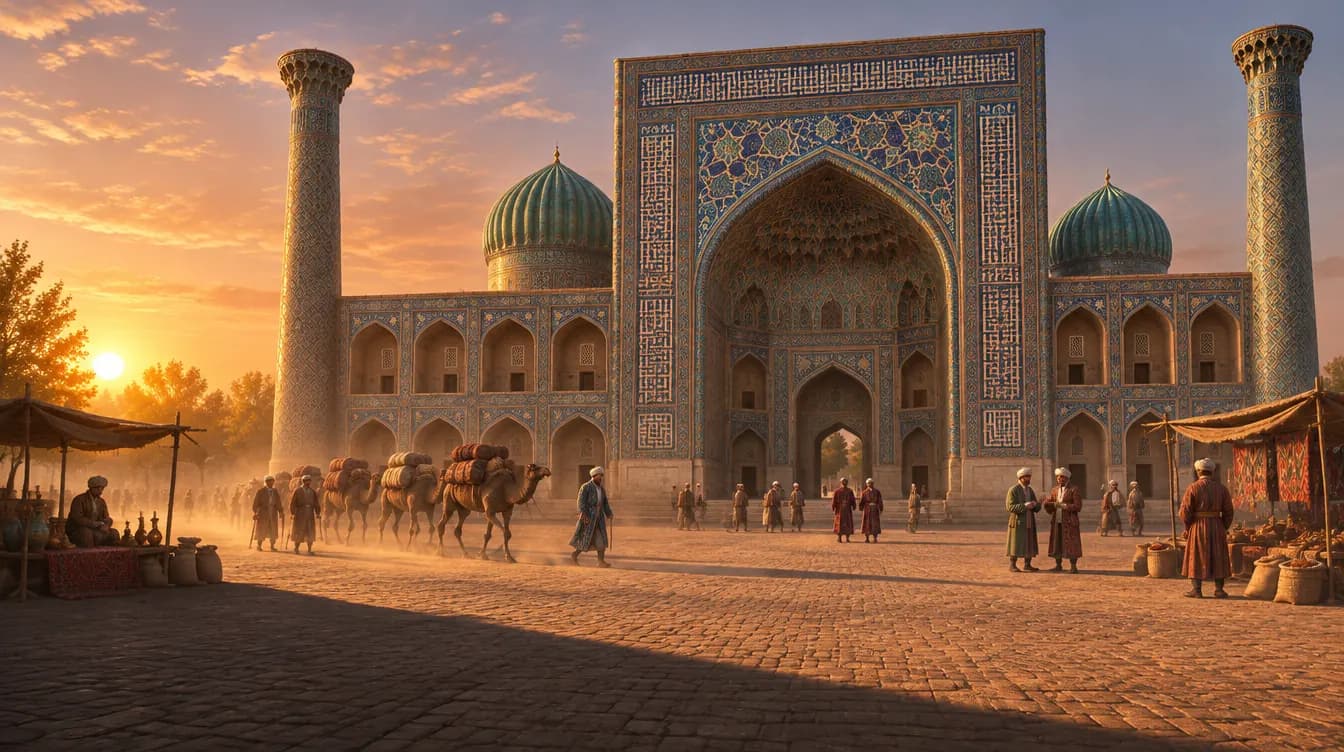
The city around you, centuries ago
Each tour is one place at one moment in its history. You look around, walk the square, and the headset tells you what you're seeing.
سمرقند
Put on a headset and walk through Uzbekistan's historic cities as they looked when they were built, while the headset itself tells you what happened on the spot where you stand.

Each tour is one place at one moment in its history. You look around, walk the square, and the headset tells you what you're seeing.
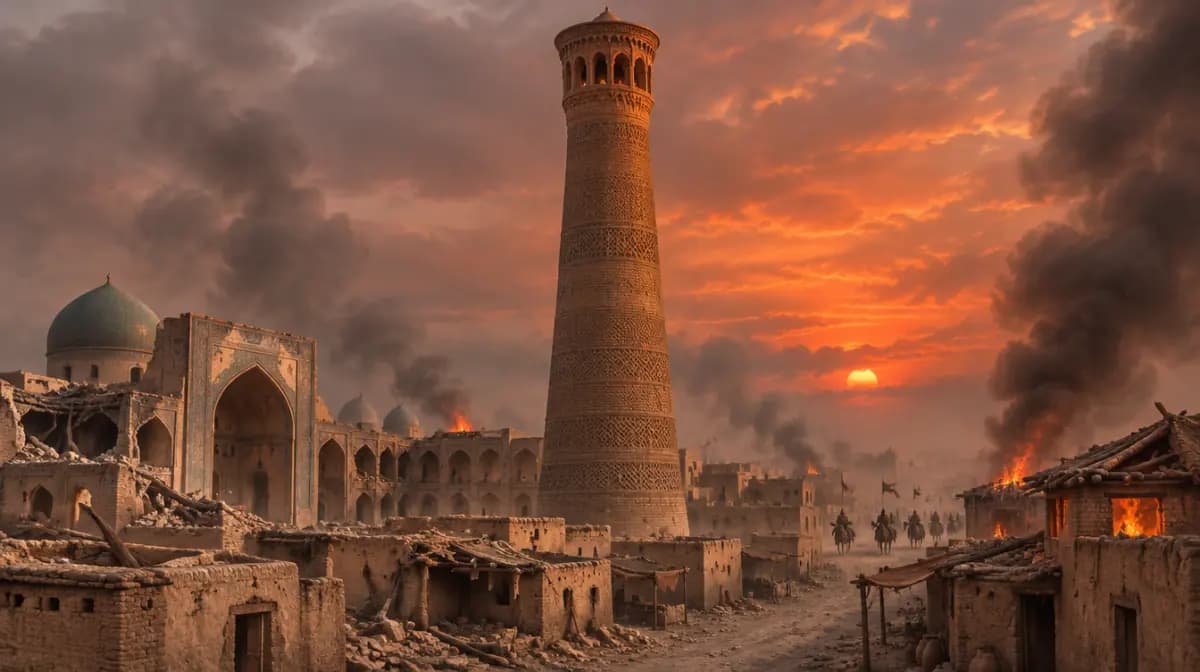
The Mongol army takes the city and much of it burns. The Kalyan minaret, already a century old, is left standing. It is still there today.
بخاراThe ribbed dome was finished a year earlier as a tomb for his grandson. Now Timur is laid to rest under it.
گور امیرUlugh Beg's madrasah has just opened. The two that face it today won't be built for another two hundred years.
ریگستانEvery tour is built from archaeological plans, old photographs and the buildings as they stand now. Ordered by when they were built.
1127
Built by the Karakhanid ruler Arslan Khan, 46 metres of patterned brick. The story goes that Genghis Khan looked up at it in 1220 and ordered it spared.
Tour 20 min
11th–19th c.
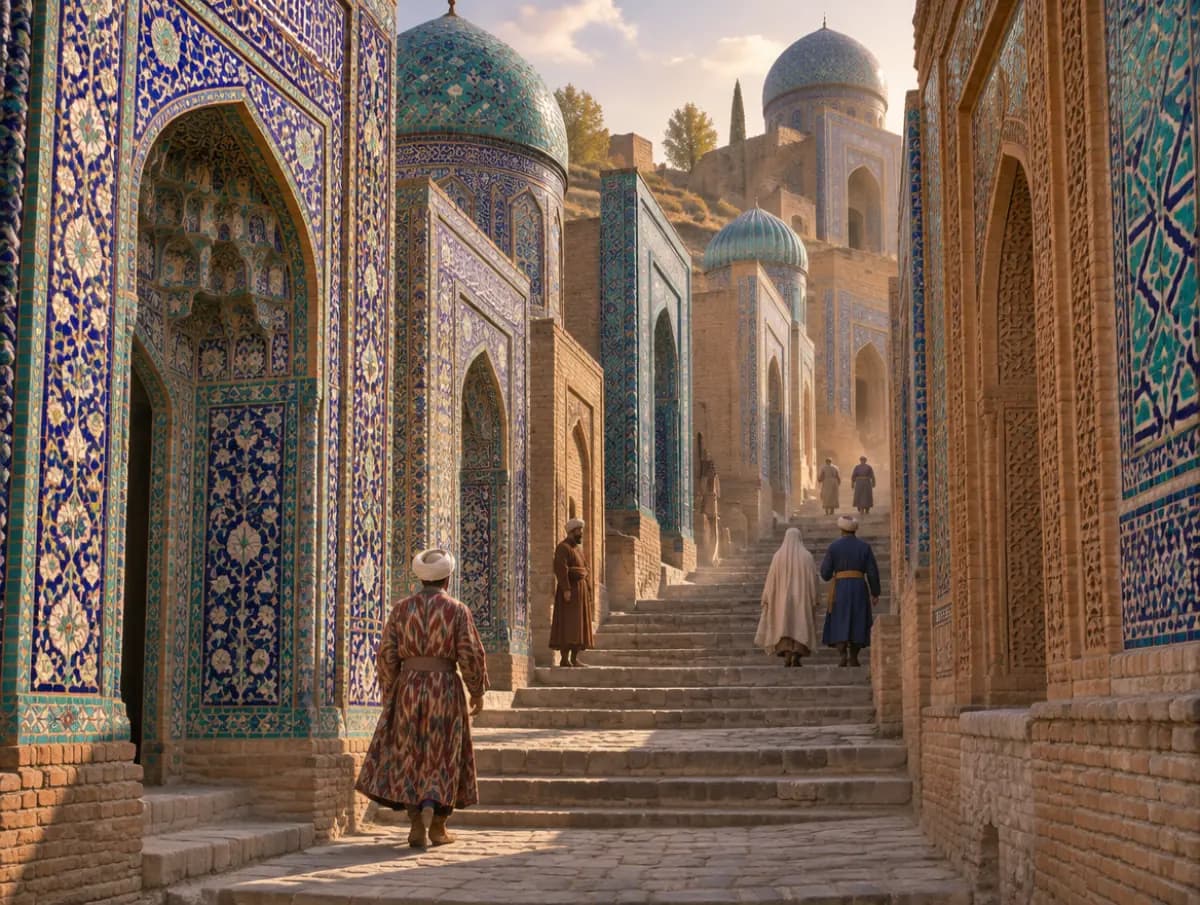
A street of mausoleums climbing a hill, built over eight centuries around the shrine of Qusam ibn Abbas. Most of its tilework dates from Timur and Ulugh Beg.
Tour 25 min
1380
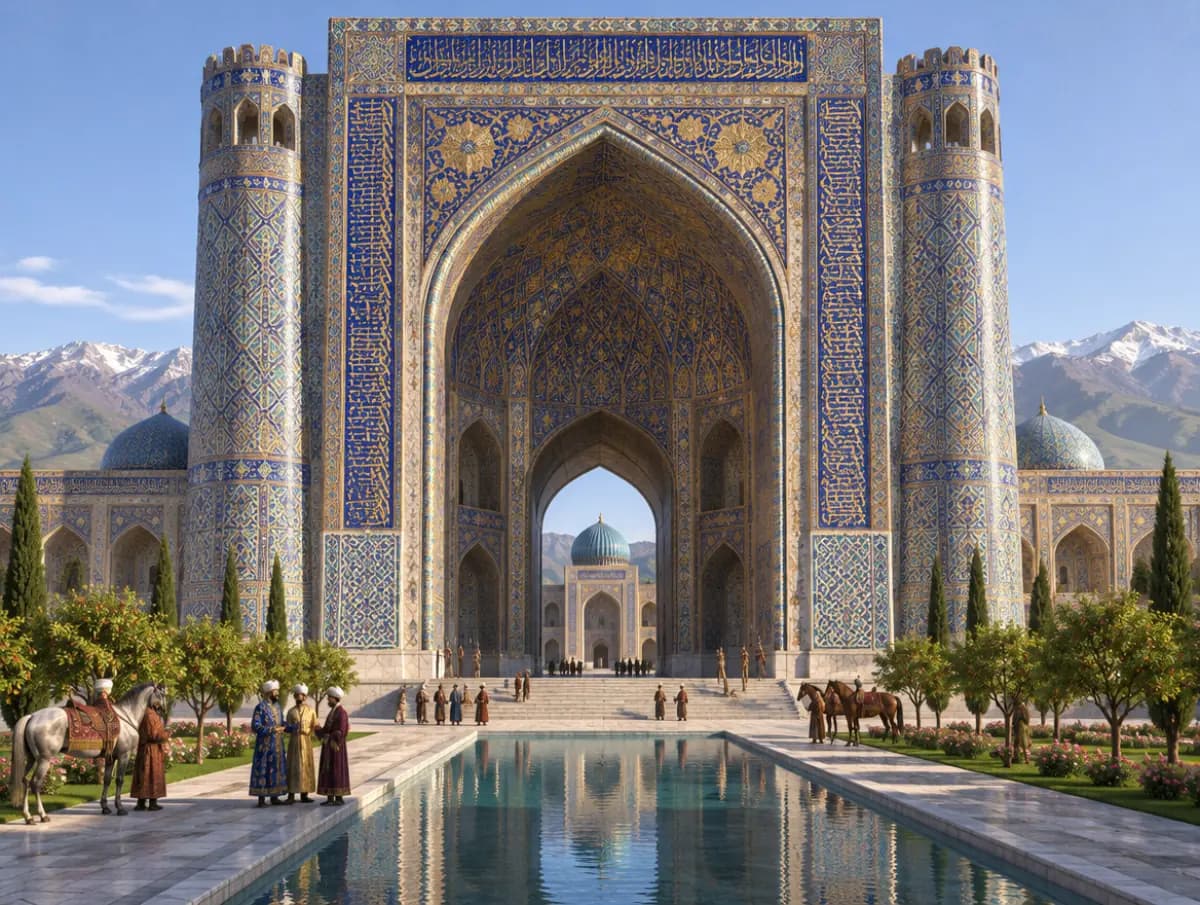
Timur's palace in his home town. Only the stumps of the entrance arch survive, still nearly 40 metres high. In the headset you see the whole arch.
Tour 20 min
1399–1404
Begun after Timur's campaign in India and built in a hurry for its size. It started to crack within years, and the earthquake of 1897 brought much of it down.
Tour 25 min
1403–1404
Built as a tomb for Timur's grandson Muhammad Sultan. Timur was buried here in 1405, under a block of dark green jade.
Tour 20 min
1417–1420
The first building on the Registan as we know it. Ulugh Beg, Timur's grandson and an astronomer, is said to have taught here himself.
Tour 25 min
1420s
A three-storey observatory around a stone meridian arc about 40 metres in radius. Its star catalogue, the Zij-i Sultani, lists 1,018 stars.
Tour 20 min
1619–1660
Two more madrasahs close the square. Sher-Dor's portal shows tigers chasing deer under a sun with a human face.
Tour 20 min
1851–1855
The walled inner town of Khiva. The Kalta Minor minaret was meant to be the tallest in Central Asia and stopped at about 29 metres.
Tour 25 min
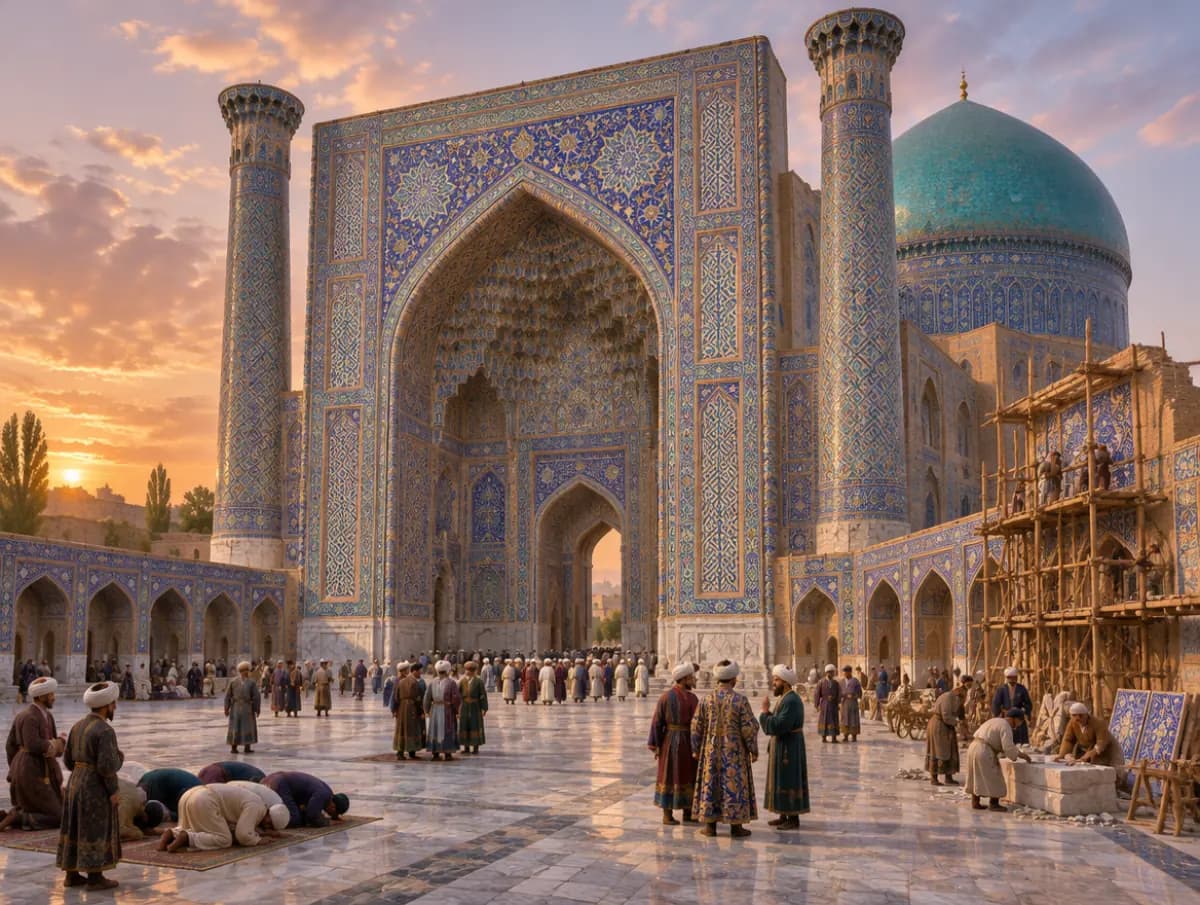
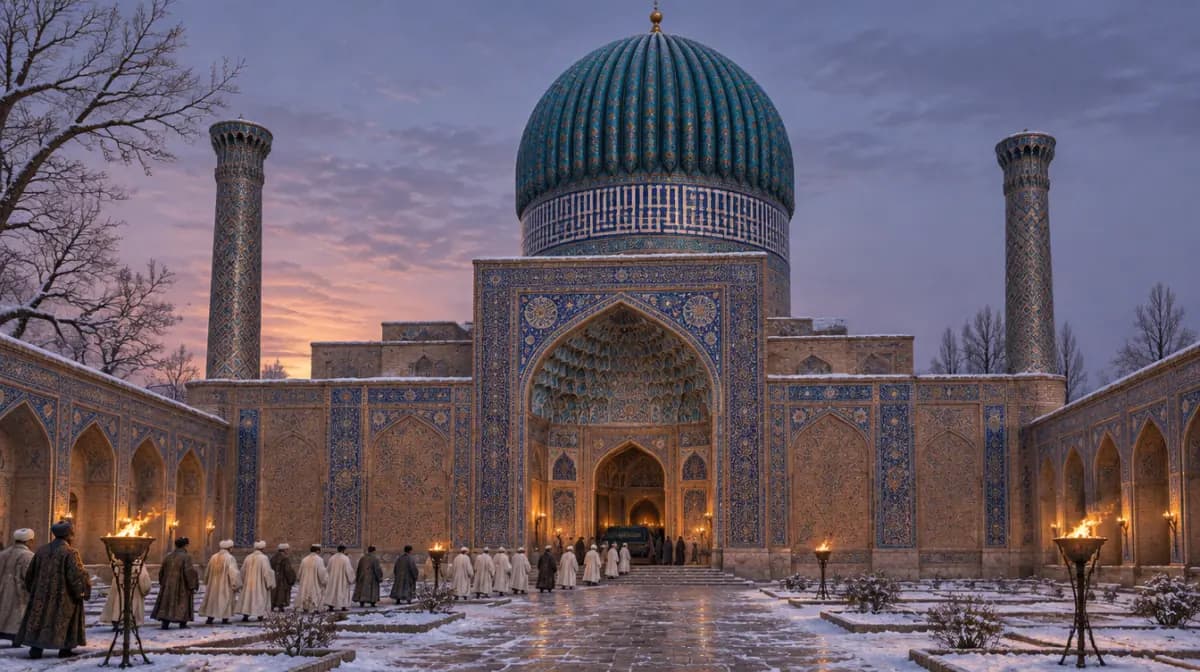
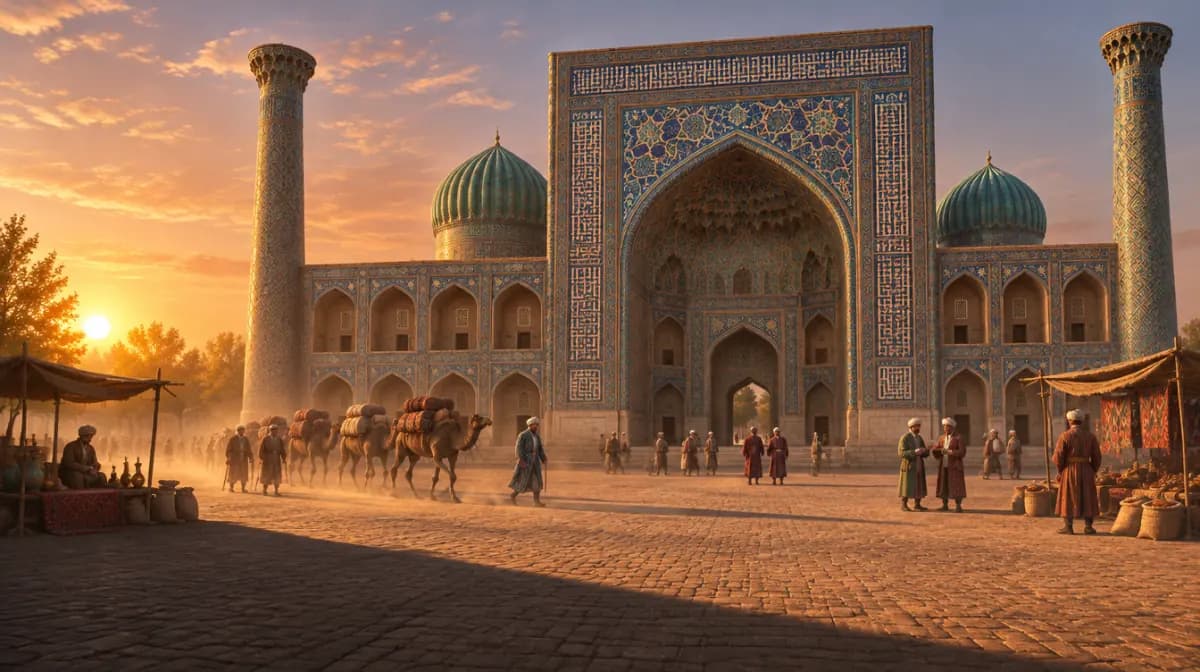
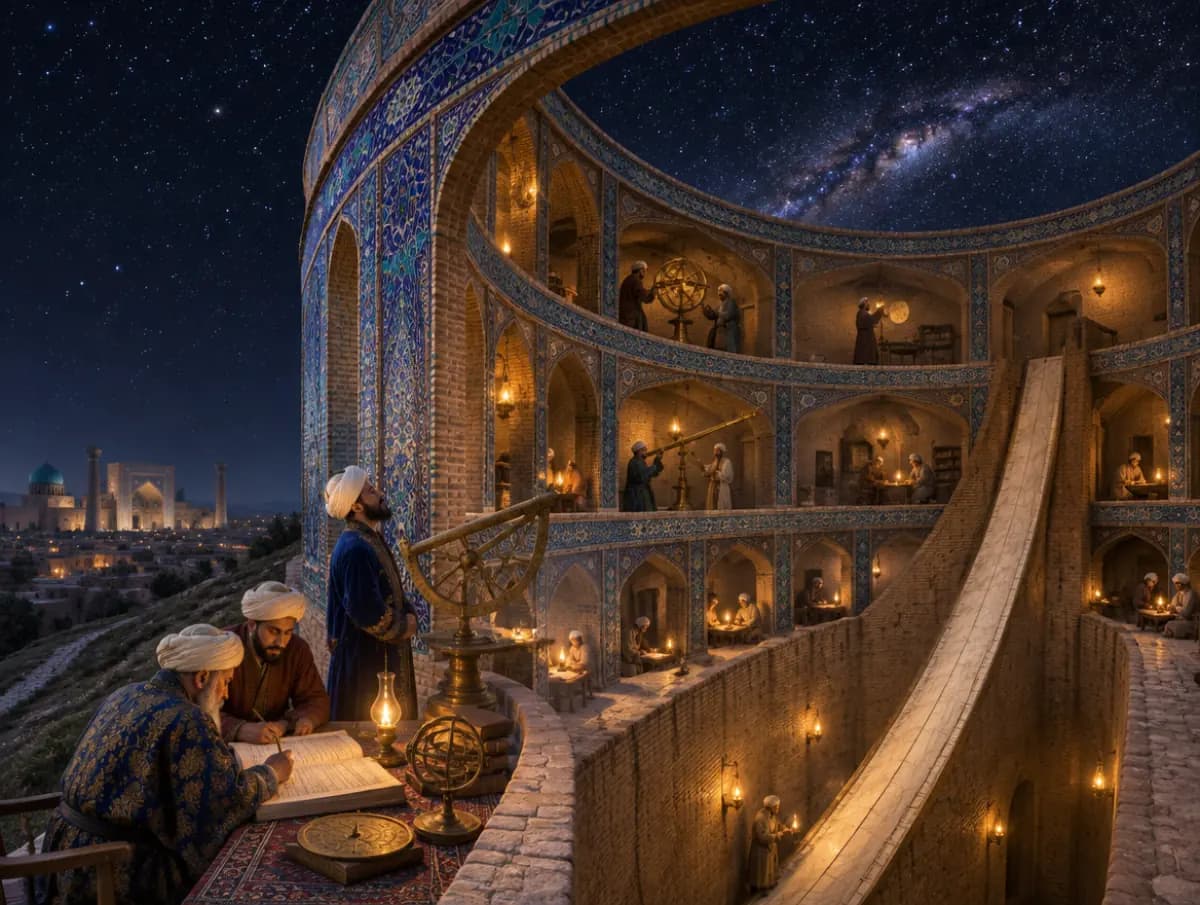
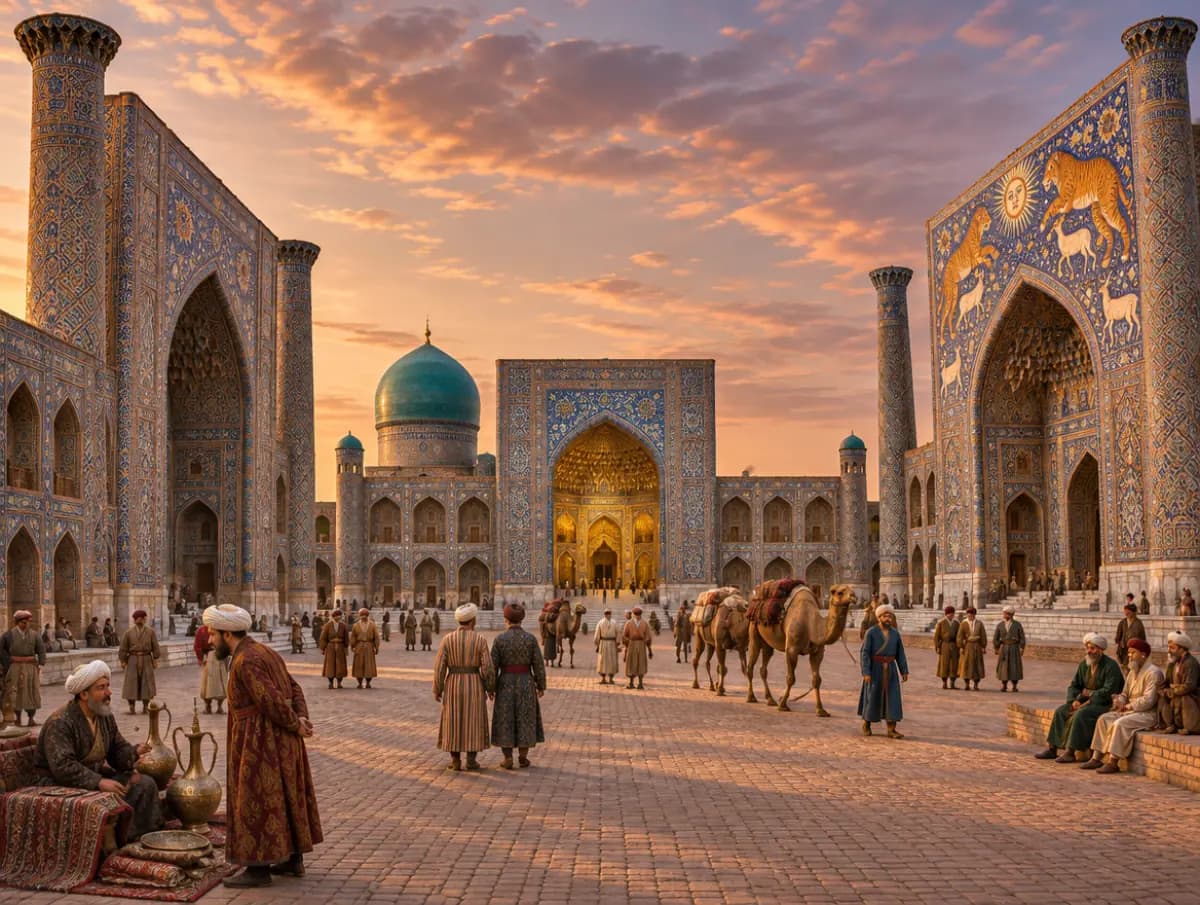
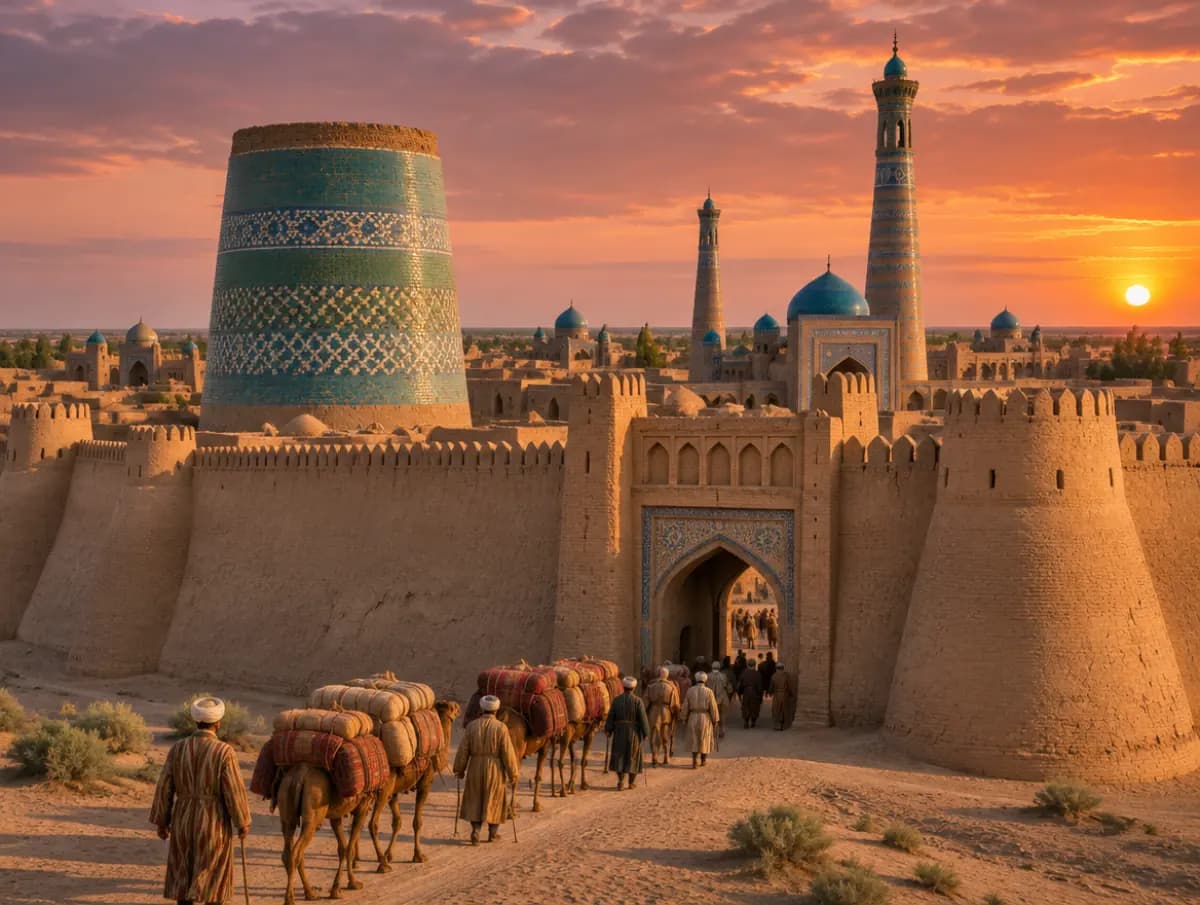
No headphones, phone or tour guide. Speakers built into the headset tell the story and fill the space around you with the sounds of the era: the bazaar, caravan bells, hammers in a workshop. Turn toward a sound and you'll see where it comes from.
You pick a time, we fit the headset and stay with you. No setup, no account, no phone needed.
Prices are coming soon
A single site, 20 to 25 minutes, for one person.
Every site in one city back to back, about an hour, with a break between tours.
Up to 20 headsets at once. We bring them to your school, museum or hotel.
No. We bring the headset, fit it for you and stay with you for the whole session.
No. The narration and the sounds around you both come from speakers built into the headset.
Every tour is narrated in Uzbek, Russian or English. You choose the language at the start of the session.
Yes, from about 10 years old. School groups of up to 20 can tour together.
They are based on archaeological plans, old photographs and the buildings as they stand today. Where the sources are silent, the narration says so.
Soon. Join the waitlist and you'll be among the first to hear about sessions and prices.
Leave your contact and we'll write when the first sessions open